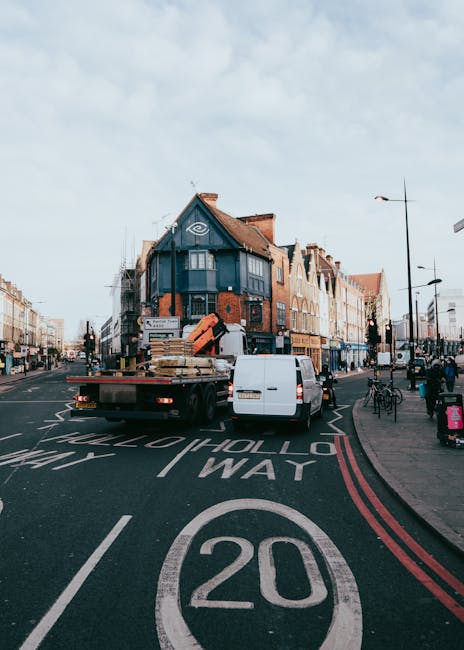
Do you need a road closure? Gipsy Hill removals and permits
Posted on 12/07/2026

Moving house in Gipsy Hill can feel simple on paper and then suddenly complicated once you look at the street outside. Is there enough room for the van? Will neighbours be able to pass? Do you need a road closure, a parking suspension, or just a sensible permit plan? In practice, most home moves do not need a full road closure, but the answer depends on access, vehicle size, timing, and how much of the carriageway or footway your move will affect.
This guide breaks down the whole thing in plain English. You'll see when a road closure is actually needed, when a parking permit or suspension may be enough, what local streets in and around Gipsy Hill can make trickier, and how to plan a move that keeps stress, delays, and parking fines to a minimum. If you're trying to avoid that last-minute scramble with a van idling outside while someone runs around for permission, you're in the right place.
- Why it matters
- How it works
- Key benefits and practical advantages
- Who needs this and when it makes sense
- Step-by-step guidance
- Expert tips for better results
- Common mistakes to avoid
- Tools, resources and recommendations
- Law, compliance and best practice
- Options and comparison
- Case study
- Practical checklist
- Conclusion
- Frequently asked questions
Why Do you need a road closure? Gipsy Hill removals and permits Matters
For a removal day, street access is not just a convenience issue. It affects safety, timing, cost, and how calmly the whole move unfolds. In a place like Gipsy Hill, where streets can be narrow, parking can be tight, and a single badly placed van can create a small traffic ballet nobody asked for, getting the right permission matters more than people first think.
A road closure is the most disruptive option. It is usually only considered where a move needs significant space, repeated vehicle loading, or temporary restrictions that would otherwise block traffic or endanger pedestrians. Most domestic removals won't need that level of intervention. What they often do need is a parking permit, a temporary suspension, or a carefully planned loading arrangement.
The difference is important. A permit allows a vehicle to park legally in a controlled zone or alongside restrictions, depending on local rules. A suspension temporarily removes parking rights from a bay or stretch of road. A road closure, by contrast, affects general traffic flow and usually requires more coordination, notice, and justification. That's why the question is less "Can I close the road?" and more "What is the lightest solution that still keeps the move safe and legal?"
If you want to prepare in a way that feels calm rather than chaotic, it helps to think about the wider moving process too. Planning your packing, decluttering early, and understanding access issues all make a difference; our guides on packing like a pro and the decluttering game plan are useful companions here.
How Do you need a road closure? Gipsy Hill removals and permits Works
Road access for removals usually sits on a scale. At one end, you do nothing because the van can park safely on private land or in a fully legal loading area. In the middle, you arrange parking permission or a suspension. At the far end, you request a more serious traffic management measure such as a road closure. The right option depends on what the street looks like, how long you'll need, and whether your move affects traffic, residents, or pedestrians.
In practical terms, the process usually starts with a site check. You look at the road width, the type of parking available, any yellow lines, busier junctions, time restrictions, and whether the property has a driveway, forecourt, or rear access. If the van can stand on private property, great. That is usually the least complicated route. If not, a permit or suspension may be the next sensible step.
Road closures tend to enter the picture when the street is especially narrow, when multiple large vehicles are involved, when equipment needs extended set-down space, or when access would create unsafe obstructions. That's not everyday removals territory. It is more likely in unusually constrained streets, bigger moves, or where the move must happen at a very specific time and safe loading cannot be achieved otherwise.
One thing people sometimes miss: the removal vehicle itself is only part of the puzzle. Lifts, stairs, bulky furniture, and parking all interact. A home with awkward access can make a simple-looking move feel much bigger. If that sounds familiar, the articles on narrow staircases in Victorian Gipsy Hill homes and Norwood Road flats near SE19 are well worth a read.
Key Benefits and Practical Advantages
Sorting permissions properly does more than keep you on the right side of the rules. It creates breathing room. That sounds a bit airy, maybe, but on moving day breathing room is gold.
Here's what good access planning gives you:
- Less delay: the crew can start unloading without waiting for a parking miracle.
- Lower stress: you are not trying to improvise around a blocked bay at 8:15 in the morning.
- Better safety: fewer rushed lifts, fewer awkward carries, less risk around traffic or pedestrians.
- Cleaner timings: larger items can be moved in a proper sequence rather than dragged through a messy bottleneck.
- Fewer penalties: the obvious one, and probably the one people remember after the fact.
There is also a less visible benefit: a better first impression on the street. Neighbours are usually far more relaxed when a move looks organised. A van positioned properly, a team moving efficiently, and a clear plan for loading can make a big difference. People notice when you've thought it through.
For heavier or fragile items, the right access arrangement can protect the furniture itself. Pianos, sofas, beds and large wardrobes are easier to move when the team is not carrying them extra distance around parked cars or squeezing through a poor angle. That's why specialist handling links closely with the physical side of the move, as explained in piano removals in Gipsy Hill and furniture removals in Gipsy Hill.
| Option | Best for | Typical impact | Practical note |
|---|---|---|---|
| Private drive or forecourt | Homes with direct off-street access | Lowest disruption | Usually the simplest and quickest option |
| Parking permit or loading permission | Typical residential moves | Moderate | Often enough for vans and short loading periods |
| Temporary parking suspension | Narrow roads or restricted bays | Higher | Useful where a bay must be kept clear for the van |
| Road closure or traffic management | Exceptional access problems | Highest | Only sensible where other options won't keep people safe |
Who This Is For and When It Makes Sense
This topic matters to a wide range of people, not just homeowners moving a whole house. In Gipsy Hill, you'll see it crop up for flat moves, student moves, office clearances, urgent same-day removals, and larger family relocations. The common thread is access.
You may need to think about permits or more serious restrictions if you are:
- moving from a narrow residential street with limited passing space;
- living in a flat where the van cannot safely park right outside;
- moving large furniture that needs space for loading ramps or trolleys;
- using a removals team in a busy time window, such as early morning or late afternoon;
- dealing with awkward corners, steep kerbs, or a lot of foot traffic;
- moving bulky items from a property near local landmarks, station approaches, or busier roads.
Students and renters often assume permits are only for big house moves, but that's not quite right. A compact move can still need permission if the street is constrained or parking is tightly managed. Likewise, an office move can be more demanding than a domestic move because there may be more equipment, more boxes, and stricter timing. If you are looking at a smaller, faster move, the page on same-day removals in Gipsy Hill may help you think through the timing side.
Truth be told, the safest time to ask the access question is before you book anything. Not after the van is already on the road. That sounds obvious, but it happens all the time.
Step-by-Step Guidance
If you want a straightforward way to handle road access for a move in Gipsy Hill, use this sequence. It keeps the decision practical rather than theoretical.
- Check your property access first. Look for driveways, loading space, rear access, or nearby unrestricted parking. If you have private space, that may solve the problem immediately.
- Measure the moving challenge. Think about van size, furniture dimensions, stair access, and whether items need a long carry. A small van can sometimes do the job better than a larger one on a tight street.
- Assess the street conditions. Look for yellow lines, narrow turns, corners, or pinch points. If the vehicle would block traffic or footway access, you probably need more than informal stopping.
- Decide whether a permit or suspension is enough. In many residential moves, that is the correct middle ground. It supports legal parking without escalating to a full closure.
- Allow enough lead time. Some permissions take planning. Leave a margin rather than assuming everything can be fixed the day before. A rushed permit plan is, shall we say, not ideal.
- Brief the removals team. Tell them about access limits, staircases, parking, lift availability, and any local constraints. That information helps them choose the right vehicle and loading method.
- Prepare the property. Clear hallways, protect floors, and stage boxes sensibly so the move can flow once the vehicle is in place. Our guide on preparing your house for a move is handy for this part.
- Recheck the morning of the move. Weather, roadworks, and neighbour parking can change the picture overnight. A last-minute glance can save a headache.
If there is one thing to keep repeating, it is this: access planning should happen alongside packing, not after it. Those two jobs support each other. Good packing reduces time on the street, and good access reduces the pressure on the crew. Simple, but easy to miss when the kettle is still boiling and the boxes are multiplying.
Expert Tips for Better Results
In our experience, the best moving days are rarely the ones with the most complicated permissions. They are the ones where the little things were handled early. Here are the details that make a real difference.
- Choose the right vehicle size. Bigger is not always better in Gipsy Hill. A slightly smaller van may fit the street better and reduce shuffling.
- Pack with the road space in mind. If the move has a long carry, keep essential items accessible so the first load is efficient. That means less back-and-forth. Less faff.
- Book around local pressure points. Near station areas, school runs, or busy commuter periods, timing matters. A few minutes can make the difference between a clean stop and a frustrating one. The article on best routes around Gipsy Hill station gives useful local context.
- Keep bulky items grouped. Sofas, beds, and wardrobes should be ready to go in a clear order. It sounds basic, but it prevents the crew from weaving in and out for one item at a time. For heavier pieces, see bed and mattress moving advice.
- Use specialist help for awkward items. Piano moves, glass pieces, oversized wardrobes, and antique furniture deserve proper handling. That is not the time to improvise with a blanket and optimism.
- Think about disposal too. If old items are leaving the property at the same time, plan the waste route separately so the street doesn't become cluttered. The guidance on large-item rules for Gipsy Hill moves is worth a look.
A tiny but useful habit: keep one person in charge of access decisions on the day. Too many voices can slow things down. One decision-maker, one phone, one plan. It's boring in the best possible way.

Common Mistakes to Avoid
The biggest errors around road closures and permits are usually not technical. They are planning errors.
- Assuming a road closure is the default answer. It usually isn't. Start with the least disruptive legal option and move upward only if needed.
- Leaving parking decisions too late. This causes the most avoidable delays. The van arrives, then everybody starts looking at signs as if they might change their mind.
- Ignoring loading time. A permit that works for five minutes may not work for a full domestic load-out.
- Forgetting neighbours and access routes. Even if your move is legal, you still want to avoid blocking bins, entrances, or shared paths.
- Using the wrong vehicle. A huge van in a tight lane can be more trouble than it is worth.
- Not checking the final route. A move can be ruined by one awkward corner, temporary roadwork, or a delivery vehicle that shouldn't be there but is.
- Overpacking boxes and slowing the move. Heavy boxes create slower handling and longer carry times. That can matter more than people expect.
One mild truth: a move that seems "just local" can still go sideways if the access plan is vague. Local does not always mean easy.
Tools, Resources and Recommendations
You do not need a big toolkit to manage road access well, but a few practical things help enormously.
- Camera or phone photos: useful for documenting the street, bay layout, and any access obstacles.
- Basic tape measure: helpful if you need to compare vehicle length against available space.
- Printed move plan: especially good when several people are involved and nobody wants to be the one asking, "Where are the keys again?"
- Labels and markers: reduce loading time, which reduces street occupancy time.
- Protective materials: floor covers, blankets, and straps help the crew work efficiently once the vehicle is parked.
If you need a wider planning view, these site resources are useful: services overview, removal services in Gipsy Hill, and pricing and quotes. For people balancing multiple priorities, the guide on relocating your home with zero stress is a calm, sensible starting point.
And if you are comparing where to put oversized items during a staggered move, storage can be a practical pressure valve. Sometimes the clever move is not to force everything through one doorway in one day. The page on storage in Gipsy Hill is worth considering for that kind of split plan.
Law, Compliance, Standards, or Best Practice
Any discussion of road closures, permits, and parking should be handled carefully. Local rules can vary by street, by time of day, and by council procedure. That means it is best to treat permissions as something to confirm rather than assume. For a move in Gipsy Hill, you should be prepared for council-managed parking controls, local loading restrictions, and the possibility that extra measures are needed where a vehicle would create obstruction or risk.
As a matter of best practice, a removals provider should work in a way that protects people, property, and traffic flow. That includes planning safe loading, using suitable equipment, not overreaching with oversized vehicles, and being honest about whether a road closure is genuinely necessary. In many cases, a legal loading arrangement is more proportionate and more practical.
There are also general safety expectations to keep in mind. A move should not force pedestrians into dangerous situations, should not block emergency access, and should not rely on guesswork. If the job involves heavy lifting or awkward handling, professional methods matter. If you want to understand the safety mindset behind this, the pages on insurance and safety and health and safety policy are relevant reading.
Best practice is also about communication. Give advance notice where needed, keep residents informed where possible, and make sure the crew has accurate access details. That is not just polite. It is often the difference between a tidy move and an irritating one.
Options, Methods, or Comparison Table
If you are still deciding whether a road closure is necessary, compare the common approaches side by side. It helps make the decision less abstract.
| Method | Pros | Cons | Best use case |
|---|---|---|---|
| Private driveway or off-street loading | Fast, simple, least disruptive | Not available at every property | Homes with generous access |
| Parking permit | Usually straightforward and practical | May still leave limited loading time | Most standard residential moves |
| Parking suspension | Creates clear loading space | Requires more planning | Narrow streets and tight kerbside access |
| Road closure | Maximum control over traffic and access | Most disruptive and least common | Exceptional access or safety situations |
For most people, the answer will sit in the middle of this table. Not the most dramatic option. The practical one. The move goes smoother, the street stays usable, and you avoid turning a Saturday morning into a small administrative saga.
Case Study or Real-World Example
Here is a typical Gipsy Hill-style scenario. A family is moving from a Victorian terrace with limited frontage and a tight street outside. The property itself is manageable, but the van cannot simply park outside for a long period without causing problems. The first instinct is to worry about whether a road closure is needed.
After a proper look, the move is re-planned. Instead of closing the road, the team arranges a legal loading position, times the arrival to avoid the busiest period, and stages the furniture so the heaviest items come out first. The crew also keeps the hallway clear and uses a smaller vehicle that fits the street better. No drama, no full closure, no unnecessary disruption.
That sort of outcome is common. Once the access is understood, the solution is often more modest than people feared. A clear permit plan and the right vehicle choice can remove the need for a heavy-handed approach. That's especially true when the crew already knows how to work with restricted access, stairs, and awkward items. If you're dealing with a flat, the article on flat removals in Gipsy Hill gives a good sense of the practical realities.
And yes, occasionally you do need something more disruptive. But that tends to be the exception, not the standard. Which is probably a relief.
Practical Checklist
Use this checklist before moving day. It keeps the decision about road closure, permits, or parking suspensions grounded in reality.
- Confirm whether there is private parking or loading space.
- Check for yellow lines, time restrictions, or controlled parking zones.
- Measure the street space and think about van size.
- Decide whether a permit, suspension, or more formal access control is likely needed.
- Identify any awkward corners, narrow turns, or pedestrian pinch points.
- List the largest and heaviest items separately.
- Make sure packing is finished enough to keep loading quick.
- Tell the removals team about stairs, lifts, and carrying distances.
- Plan for bins, neighbours' access, and any shared entrances.
- Recheck the area on the day in case road conditions have changed.
If you want to tidy the whole move beyond the parking question, it is worth reading about parking access and timing around Crystal Palace Park moves and pre-move permit tips for Gipsy Hill. Those local considerations often travel together.
Get a free quote today and see how much you can save.
Conclusion
So, do you need a road closure for Gipsy Hill removals and permits? In most cases, no. A permit, a suspension, or a well-planned loading arrangement will usually do the job. But the right answer depends on the street, the vehicle, the furniture, and how much disruption your move could create if it is left to chance.
The real goal is not to pick the biggest-sounding option. It is to choose the lightest, safest, most practical one that lets the move happen cleanly. Get the access right and everything else tends to breathe easier: packing, loading, timing, and even the mood in the house on the morning itself.
Move well, plan early, and keep it simple where you can. That's usually the winning formula.